
What Is Depression Counseling? Types, Benefits, And When To Go
Depression doesn’t announce itself with a single moment, it builds quietly, affecting how you think, feel, and move through daily life. When symptoms persist, what is depression counseling becomes a practical question worth answering. It’s a structured form of therapy designed to help you understand the roots of your depression, develop coping strategies, and work toward genuine relief.
This article breaks down the core elements of depression counseling, including the most effective therapeutic approaches like Cognitive Behavioral Therapy and psychotherapy. You’ll learn how these methods actually work, what to expect from sessions, and the specific benefits that come from professional support. We’ll also cover the signs that indicate it’s time to reach out and how to find the right therapist for your situation.
At New Perspective Counseling, we specialize in treating depression through both traditional talk therapy and evidence-based techniques like EMDR and Internal Family Systems therapy. Our approach recognizes that depression affects each person differently, which is why we create individualized treatment plans rather than following a generic script. Whether you’re exploring counseling for the first time or considering a new direction in your mental health care, this guide will give you the clarity you need to take the next step.
Why depression counseling matters
Depression shrinks your world in measurable ways. You might find yourself avoiding social interactions, struggling to complete basic work tasks, or feeling disconnected from activities that once brought satisfaction. When these patterns persist, professional intervention through what is depression counseling offers becomes the difference between prolonged suffering and meaningful recovery. The value extends beyond symptom management to rebuilding the fundamental capacity to engage with your life.
The real cost of untreated depression
Untreated depression doesn’t remain static. Your brain chemistry shifts over time, making negative thought patterns more automatic and harder to interrupt without guided support. Research shows that the longer depression goes unaddressed, the more it affects your physical health, relationships, and career trajectory. You may lose years to a condition that responds well to structured treatment when you receive proper care.

Professional counseling provides the external perspective and evidence-based techniques that self-help approaches cannot replicate alone.
Physical symptoms compound the psychological burden. Depression alters your sleep architecture, disrupts appetite regulation, and weakens immune function. These biological changes create a feedback loop where poor physical health intensifies depressive symptoms, making it progressively harder to function. Depression counseling interrupts this cycle by addressing both the mental and physical manifestations simultaneously through targeted interventions.
What professional guidance actually changes
Counseling gives you concrete tools to challenge distorted thinking rather than accepting your depressive thoughts as accurate reflections of reality. A trained therapist identifies patterns you can’t see yourself, the subtle ways your mind reinforces hopelessness or self-criticism. This external perspective proves essential because depression actively impairs your ability to evaluate your own situation objectively.
The relationship itself serves as a therapeutic element. Working with a professional creates accountability and structure during periods when motivation disappears entirely. You show up even when you don’t feel like it, and that consistency builds momentum. Your therapist tracks progress you might not recognize, pointing out improvements in your behavior or thought patterns that would otherwise go unnoticed during difficult weeks.
Recovery patterns differ dramatically between those who seek counseling and those who attempt to manage depression independently. Professional treatment shortens the duration of depressive episodes and reduces the likelihood of relapse. You learn specific techniques like behavioral activation, thought restructuring, and emotional regulation that remain useful long after formal therapy ends. These skills become permanent additions to your coping toolkit, providing protection against future episodes.
Depression counseling also addresses the isolation that depression creates. Your therapist understands the condition from both clinical training and repeated exposure to how it manifests across different individuals. This expertise prevents the common pitfalls of well-meaning but unhelpful advice from friends or family who may inadvertently reinforce negative patterns. You receive guidance calibrated to your specific presentation rather than generic suggestions that overlook the complexity of your situation.
How depression counseling works in practice
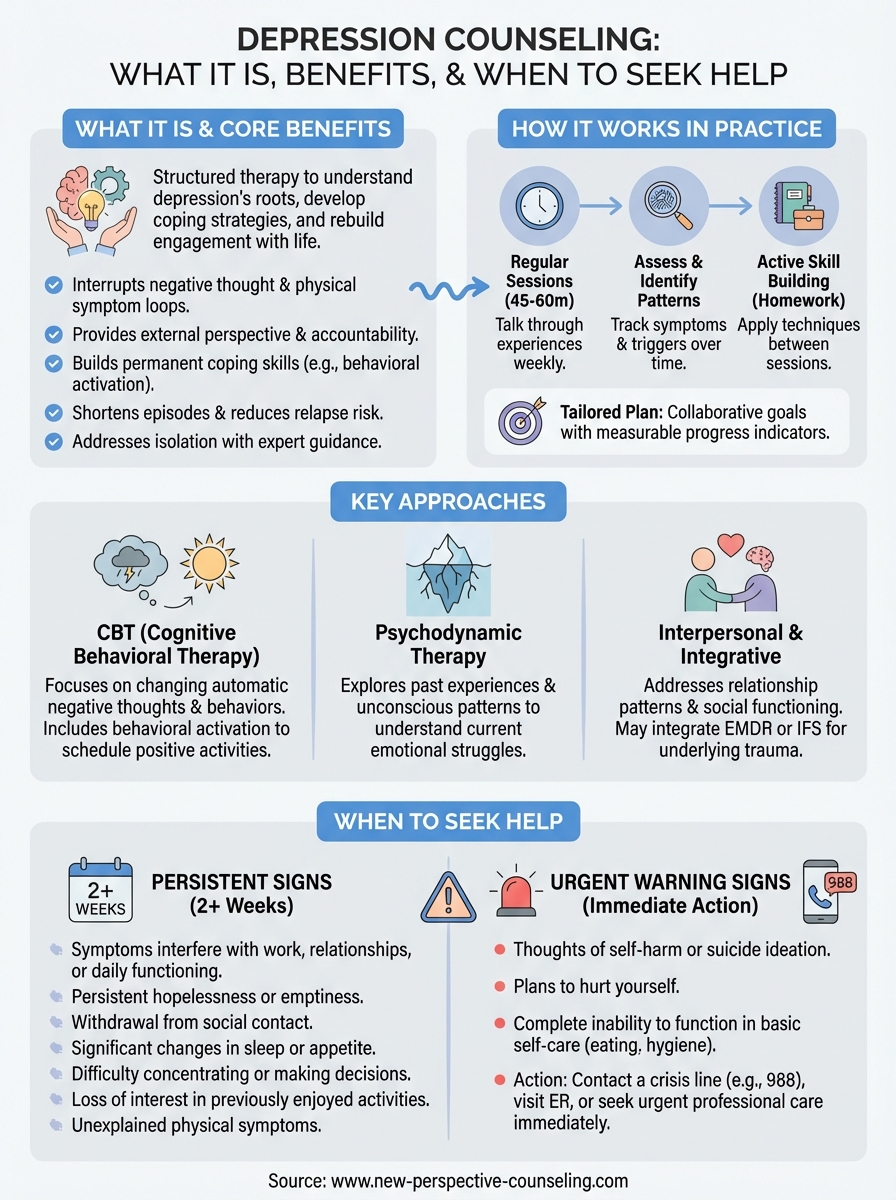
Understanding what is depression counseling in theory differs significantly from experiencing it firsthand. Your sessions typically run 45 to 60 minutes and occur weekly at the start of treatment, though frequency adjusts based on your needs and progress. Each appointment provides dedicated time where you talk through your experiences while your therapist guides the conversation toward productive insights and concrete strategies.
The session structure
Your therapist begins by assessing your current state rather than diving into predetermined topics. You discuss what happened since your last meeting, which symptoms intensified or improved, and any situations that triggered depressive thoughts. This real-time tracking allows your counselor to identify patterns across multiple weeks that you might not notice in isolated moments. Sessions feel conversational rather than clinical, though your therapist directs the dialogue toward therapeutic goals.
The work happens both inside and outside sessions, with your therapist assigning specific practices to implement between appointments.
Homework assignments reinforce session work through practical application in your daily life. You might track mood fluctuations in a journal, practice thought-challenging techniques when negative patterns emerge, or complete behavioral experiments that test depressive assumptions. These assignments transform therapy from a passive experience into active skill development that continues throughout your week.
Building your treatment plan
Your first few sessions focus on comprehensive assessment rather than immediate problem-solving. Your therapist gathers information about your symptom history, current life circumstances, past trauma, family dynamics, and previous treatment attempts. This foundation determines which therapeutic approaches will address your specific presentation of depression most effectively.
Treatment goals develop collaboratively based on what you want to change. You might target improving sleep quality, reducing self-critical thoughts, rebuilding social connections, or managing work performance. Your therapist translates these broad goals into measurable objectives with clear indicators that track whether the interventions are working. Progress reviews occur regularly, allowing you to adjust the approach when certain techniques prove more helpful than others for your particular situation.
Types of depression counseling approaches
Several therapeutic methods address depression effectively, each targeting different aspects of how the condition affects your thinking and behavior. When exploring what is depression counseling includes, you’ll encounter distinct approaches that therapists combine or apply individually based on your specific symptoms and preferences. Understanding these methods helps you identify which framework might resonate most with your situation.

Cognitive Behavioral Therapy (CBT)
CBT represents the most researched approach for depression treatment. This method focuses on identifying automatic negative thoughts that fuel depressive feelings and replacing them with more balanced perspectives. Your therapist teaches you to recognize cognitive distortions like all-or-nothing thinking, catastrophizing, or personalizing external events. Through structured exercises, you practice challenging these thought patterns until new ways of interpreting situations become habitual.
The behavioral component addresses the inactivity and withdrawal that depression creates. Your therapist helps you schedule activities that provide mastery or pleasure, gradually rebuilding engagement with life even when motivation remains low. This activation proves particularly effective because action often precedes mood improvement rather than waiting for motivation to appear spontaneously.
CBT equips you with specific techniques you can apply independently long after therapy concludes, making it both effective during treatment and protective against future episodes.
Psychodynamic and insight-oriented therapy
This approach examines how past experiences and unconscious patterns shape your current depressive symptoms. Your therapist explores childhood relationships, unresolved conflicts, and defensive mechanisms that may contribute to persistent negative feelings. Sessions involve deeper exploration of emotional experiences rather than immediate symptom relief, though many people find this understanding itself provides meaningful relief.
Interpersonal and integrative methods
Interpersonal therapy targets relationship patterns and social functioning that both cause and result from depression. Your therapist helps you address grief, role transitions, interpersonal disputes, or social isolation that maintain depressive symptoms. Many therapists also integrate newer approaches like Internal Family Systems or EMDR when trauma underlies your depression, recognizing that different root causes require different interventions for optimal recovery.
What to expect from your first sessions
Your initial counseling appointments focus on establishing a foundation rather than solving problems immediately. The therapist spends these early sessions gathering detailed information about your depression symptoms, daily routines, relationship patterns, and personal history. You answer questions that might feel repetitive or overly detailed, but this comprehensive assessment determines which therapeutic approaches will work best for your situation. Expect to feel somewhat drained after these early meetings as you discuss difficult experiences and emotions you may have avoided addressing.
The intake process
Your first appointment typically involves paperwork and formal assessments that document your symptoms and mental health history. You complete standardized questionnaires measuring depression severity, which your therapist uses to track improvement over time. These forms ask about sleep quality, appetite changes, concentration difficulties, and thoughts of self-harm. Answering honestly, even when uncomfortable, gives your counselor the accurate picture needed to develop an effective treatment plan tailored to your specific needs.
Part of understanding what is depression counseling involves recognizing that early sessions prioritize information gathering over immediate relief, though many people report feeling lighter simply from being heard without judgment.
The therapist explains their theoretical approach, session structure, and what they expect from you between appointments. You discuss practical details like scheduling, cancellation policies, and how to reach them during crises. This conversation establishes the boundaries and expectations that make the therapeutic relationship productive rather than confusing or frustrating as treatment progresses.
Building rapport and trust
Feeling awkward or guarded during initial sessions reflects normal protective instincts rather than therapy failure. Your brain needs time to determine whether this person feels safe enough for vulnerable disclosure. Most therapists expect this hesitation and adjust their pace based on your comfort level rather than pushing for deep revelations immediately. Trust develops gradually as your counselor demonstrates consistency, respects boundaries, and responds to your concerns without dismissing or minimizing them.
Sessions become more comfortable as you establish shared language for your experiences and recognize patterns your therapist identifies. You start noticing improvements in how you articulate emotions or recognize depressive triggers, which indicates the work has begun creating changes even before you implement major behavioral shifts.
When to seek help and how to find a therapist
Depression symptoms that persist for two weeks or longer warrant professional evaluation, particularly when they interfere with work, relationships, or daily functioning. You don’t need to reach a crisis point before seeking support. Many people wait until depression becomes severe, but early intervention produces better outcomes and prevents the condition from entrenching deeper patterns. If you find yourself questioning whether your symptoms justify therapy, that question itself often indicates you could benefit from professional assessment.
Recognizing urgent warning signs
Certain symptoms require immediate professional attention rather than waiting for a scheduled appointment. Thoughts of self-harm, suicide ideation, or plans to hurt yourself constitute mental health emergencies. Contact a crisis line, visit an emergency room, or call 988 (the Suicide and Crisis Lifeline) when these thoughts occur. Similarly, seek urgent care when depression causes complete inability to function in basic self-care like eating, hygiene, or leaving your home for necessary activities.
Understanding what is depression counseling includes recognizing when professional intervention becomes necessary rather than optional, particularly when symptoms escalate beyond your ability to manage them independently.
Watch for these additional indicators that therapy would help: persistent hopelessness lasting multiple weeks, withdrawal from all social contact, significant changes in sleep or appetite, difficulty concentrating that affects work performance, or loss of interest in activities that previously brought satisfaction. Physical symptoms like unexplained pain, digestive issues, or chronic fatigue that doctors cannot attribute to medical conditions also warrant evaluation for underlying depression.
Starting your therapist search
Begin by checking your insurance provider’s mental health directory, which lists covered therapists in your area and filters by specialty and treatment approach. Many therapists offer free initial consultations by phone, allowing you to assess whether their style and expertise match your needs before committing to appointments. Ask specific questions about their experience treating depression, which therapeutic methods they use, and how they measure progress throughout treatment. You can also request referrals from your primary care physician, who may know local counselors specializing in depression treatment for your demographic.
Next steps
Understanding what is depression counseling gives you the foundation to make informed decisions about your mental health care. You now know the different therapeutic approaches available, what happens during sessions, and which warning signs indicate you should seek professional support. This knowledge removes the uncertainty that often delays people from reaching out when they need help most.
Taking the first step requires reaching out to a qualified therapist who specializes in depression treatment. Your symptoms deserve professional attention, particularly when they persist despite your efforts to manage them independently. At New Perspective Counseling, we create individualized treatment plans that combine traditional talk therapy with evidence-based techniques like EMDR and Internal Family Systems therapy. Your depression affects you differently than it affects others, which is why we avoid one-size-fits-all approaches that overlook your unique situation.
Contact our team at New Perspective Counseling to schedule your initial assessment and begin building the skills that lead to genuine recovery.