5 Stress Management Tips For Teens To Handle School Stress
Between homework deadlines, social pressures, extracurricular activities, and the constant presence of social media, teenagers face more stressors than many adults realize. Stress management for teens isn’t just a nice-to-have skill, it’s essential for their mental health, academic success, and overall well-being. When stress goes unchecked, it can spiral into anxiety, depression, or even physical health problems.
At New Perspective Counseling, we work with adolescents every day who are struggling to keep up with the demands of school and life. We’ve seen firsthand how the right coping strategies can transform a teen’s ability to handle pressure. The good news? Stress is manageable when teens have the right tools.
This article breaks down five practical tips that can help teenagers take control of their stress levels and build resilience for the challenges ahead. Whether you’re a teen looking for ways to cope or a parent searching for guidance, these strategies offer a starting point for creating healthier habits.
1. Talk with a teen therapist who gets school stress
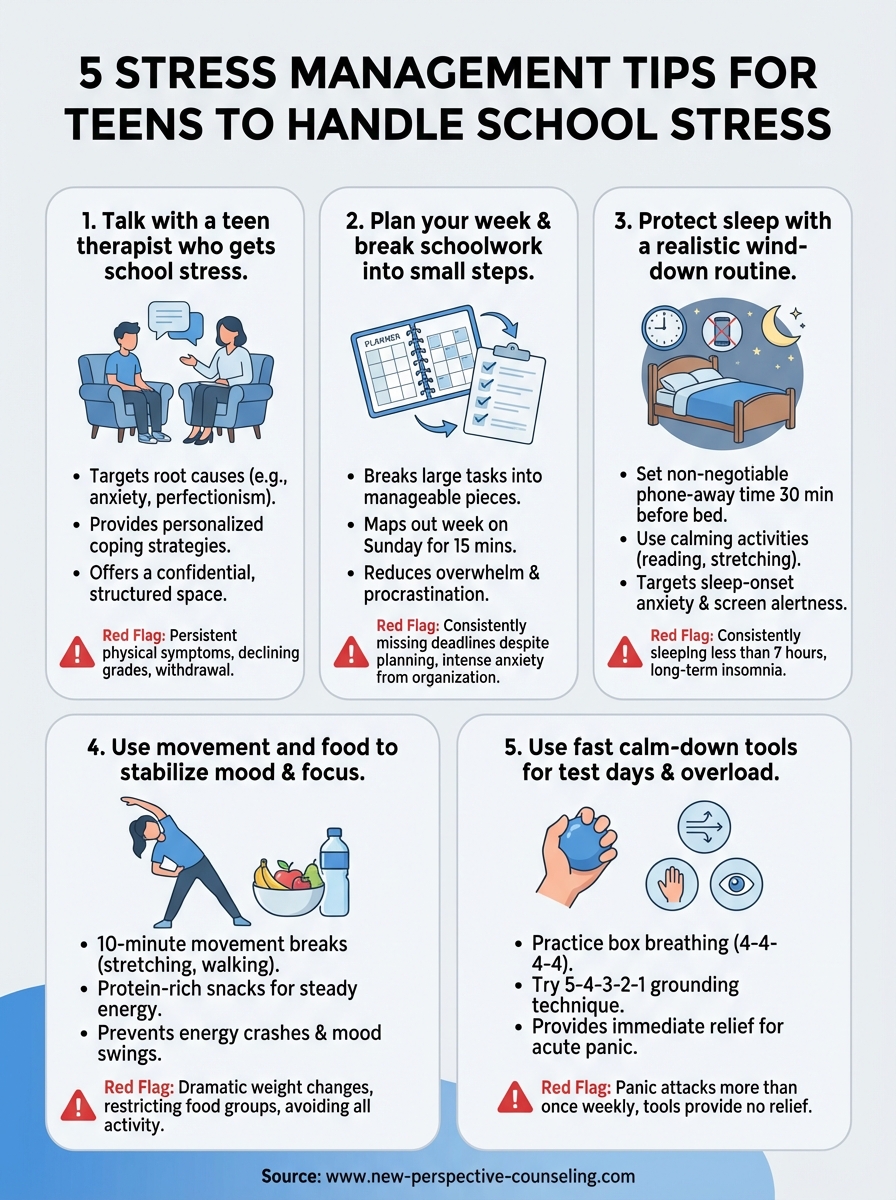
When stress starts affecting your daily life, talking to a therapist who specializes in adolescent issues can make all the difference. A teen therapist understands the unique pressures you face, from academic performance anxiety to social dynamics and future planning fears. Unlike venting to friends or family, therapy provides a structured, confidential space where you can learn personalized coping strategies that actually work for your situation. This type of stress management for teens addresses root causes rather than just surface symptoms.
What it targets
A teen therapist can help you identify stress triggers specific to school, whether it’s test anxiety, perfectionism, procrastination patterns, or social pressure to maintain a certain GPA. They work with you to understand how stress shows up in your body and mind, from physical tension to racing thoughts. Therapy also targets underlying issues like self-doubt, fear of disappointing others, or difficulty saying no to extra commitments.
“Professional support gives teens tools they can’t always learn from books or well-meaning advice alone.”
Steps to try this week
Start by researching therapists in your area who work with adolescents and school-related stress. Check if your school counselor can provide referrals or if your insurance covers mental health services. Schedule a consultation call with one or two therapists to see who feels like a good fit. If you’re hesitant, try viewing the first session as simply gathering information rather than committing to long-term treatment.
How parents can support
Parents can help by normalizing therapy as a strength, not a sign of weakness or failure. Offer to research options together and respect your teen’s need for privacy during sessions. Handle logistics like scheduling and insurance so your teen can focus on showing up and being honest in their sessions.
Red flags that mean you need more help
Watch for persistent physical symptoms like headaches, stomach problems, or sleep disruption that interfere with daily function. If you notice declining grades despite effort, withdrawal from activities you once enjoyed, or thoughts about self-harm, seek professional help immediately. These signs indicate stress has escalated beyond what self-help strategies can address alone.
2. Plan your week and break schoolwork into small steps
One of the most effective forms of stress management for teens involves taking control of your schedule before it controls you. When you face multiple assignments, tests, and deadlines all at once, your brain can freeze up, making everything feel equally urgent and overwhelming. Breaking large tasks into smaller, manageable pieces transforms an intimidating workload into a series of achievable steps that build momentum rather than anxiety.

What it targets
This strategy directly addresses procrastination and task overwhelm, two major sources of school stress. When you break a research paper into steps like “choose topic,” “find three sources,” and “write introduction,” each piece feels doable. Planning your week also targets time anxiety, the constant worry that you won’t have enough hours to finish everything.
Steps to try this week
Spend 15 minutes each Sunday mapping out your week in a planner or phone app. List all assignments, tests, and activities, then break larger projects into specific mini-tasks you can complete in one sitting. Assign each mini-task to a specific day and time block when you’ll actually do it.
How parents can support
Help your teen find a planning system that matches their style, whether that’s a paper planner, digital calendar, or visual board. Ask “What’s your plan for tackling that?” rather than micromanaging their approach.
Red flags that mean you need more help
If you consistently miss deadlines despite planning, or if organizing your week triggers intense anxiety rather than reducing it, you may need help from a school counselor or therapist who can address underlying executive function challenges.
“Small, scheduled steps prevent the paralysis that comes from staring at an impossibly large to-do list.”
3. Protect sleep with a realistic wind-down routine
Sleep deprivation makes every stressor feel more intense and harder to manage. When you stay up late cramming or scrolling through social media, your brain doesn’t get the recovery time it needs to process information and regulate emotions. Poor sleep creates a vicious cycle where stress prevents rest, and lack of rest amplifies stress. Implementing a consistent wind-down routine gives your body clear signals that it’s time to shift from alert mode to rest mode.
What it targets
A structured bedtime routine addresses sleep-onset anxiety, the racing thoughts that keep you awake when you finally lie down. It also targets screen-stimulated alertness, since blue light from devices tells your brain to stay awake. By establishing a predictable sequence of calming activities, you train your nervous system to recognize when sleep is approaching.
Steps to try this week
Set a non-negotiable phone-away time 30 minutes before your target sleep time. Use those 30 minutes for calming activities like reading, light stretching, or listening to music without screens. Keep your routine simple enough that you’ll actually follow it even on busy nights.
“Consistency matters more than perfection when building a wind-down habit.”
How parents can support
Model healthy sleep habits yourself and avoid scheduling late-night family activities during school weeks. Help create a bedroom environment that supports sleep by keeping it cool, dark, and free from work materials.
Red flags that mean you need more help
If you consistently sleep less than seven hours despite trying a routine, or if you experience insomnia lasting more than two weeks, consult a healthcare provider who can rule out sleep disorders.
4. Use movement and food to stabilize mood and focus
Your body chemistry directly affects your ability to handle stress. When you skip meals, load up on caffeine and sugar, or sit for hours without moving, you’re working against your brain’s natural stress response. Regular movement and balanced nutrition give your body the fuel it needs to maintain steady energy throughout demanding school days. This physical approach to stress management for teens creates a foundation for managing academic pressure.

What it targets
This strategy addresses energy crashes and mood swings that make stress feel unmanageable. Physical activity releases tension stored in your muscles and triggers natural mood-boosting chemicals. Consistent eating patterns prevent blood sugar drops that amplify anxiety and make concentration impossible.
Steps to try this week
Build 10-minute movement breaks into your study schedule, whether that’s stretching, dancing, or walking. Keep protein-rich snacks like nuts, cheese, or yogurt accessible so you don’t rely on vending machine options when hunger strikes.
“Your brain performs best when your body has steady fuel and regular movement.”
How parents can support
Stock the kitchen with grab-and-go healthy options and model active breaks yourself. Avoid lecturing about food choices, which backfires with teens.
Red flags that mean you need more help
Watch for dramatic weight changes, restricting food groups without medical reason, or avoiding all physical activity for more than a month.
5. Use fast calm-down tools for test days and overload
When panic rises during a test or deadlines pile up, you need quick relief techniques that work immediately. These fast calm-down tools are practical forms of stress management for teens that don’t require privacy or special equipment. Learning them before high-pressure situations gives you reliable options when stress kicks into overdrive.
What it targets
Fast techniques target acute stress responses like rapid heartbeat, shallow breathing, and racing thoughts that interfere with performance. They activate your body’s relaxation system, which counteracts fight-or-flight reactions.
Steps to try this week
Practice box breathing (inhale 4 counts, hold 4, exhale 4, hold 4) until it becomes automatic. Try the 5-4-3-2-1 grounding technique: name 5 things you see, 4 you touch, 3 you hear, 2 you smell, and 1 you taste. Keep a stress ball or textured object in your pocket for discreet physical grounding during tests.
“Having practiced calm-down tools before you need them makes them actually work under pressure.”
How parents can support
Help your teen practice these techniques during calm moments so they become muscle memory. Avoid dismissing anxiety by saying “just relax,” which makes stress worse.
Red flags that mean you need more help
If panic attacks occur more than once weekly, or if these tools provide no relief despite consistent practice, professional anxiety treatment may be necessary.
Next steps
These five strategies give you concrete tools for managing school stress without depending on willpower alone. Stress management for teens works best when you combine professional support with daily habits that address both your mind and body. Start by choosing one or two techniques that feel most urgent for your current situation rather than trying to overhaul everything at once.
Remember that building new habits takes time and practice. You won’t master these strategies overnight, but consistent small efforts create meaningful change over weeks and months. Track what helps and what doesn’t, then adjust your approach based on real results rather than what sounds good in theory.
If school stress continues overwhelming you despite trying these tools, professional help can provide the specialized support you need. Our therapists at New Perspective Counseling work specifically with teens facing academic pressure, anxiety, and the unique challenges of adolescence. Reaching out for help demonstrates strength and self-awareness, not weakness.