

Can’t Stop Checking Locks and Appliances | OCD Therapy Michigan
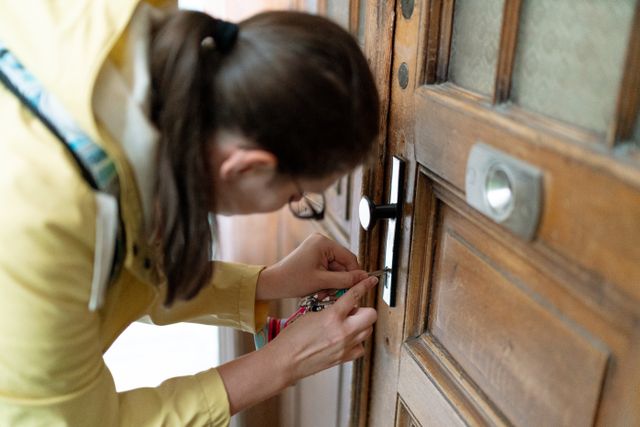
Repeatedly checking locks, appliances, doors, or switches can become exhausting when you never feel fully certain that things are safe. You may know you already checked, yet the doubt comes back and makes you feel as though you have to look again.
New Perspective Counseling provides OCD treatment for adults across Michigan who are stuck in repeated checking, reassurance-seeking, intrusive thoughts, mental reviewing, or other compulsive patterns. The practice’s OCD treatment is grounded in Exposure and Response Prevention (ERP), a well-established evidence-based treatment for OCD. Online therapy is available statewide, with in-person care at our Highland office.
Why Checking Feels Necessary Even When You Know You Already Did It
Checking usually brings relief at first. You look at the stove, confirm the door is locked, or make sure an appliance is unplugged, and your anxiety drops.
Then doubt returns.
You may think:
- What if I looked but did not really register it?
- What if I turned the knob the wrong way?
- What if I caused a fire?
- What if someone gets hurt because I was careless?
- What if I leave and realize I missed something?
Checking often works briefly by lowering anxiety in the moment. That short-term relief can teach your brain that checking was necessary, which makes the next urge feel even more important.
Online ERP therapy for OCD can help you change that cycle by practicing uncertainty without repeatedly using checking to feel safe.
How Checking Can Expand Over Time
A checking ritual may begin with one concern and gradually take up more time.
You might start by checking the front door once and later find yourself returning several times. You may photograph appliances before leaving, retrace your steps, ask someone else to verify that something is off, or mentally replay the moment you locked the door.
Some people are late to work or avoid leaving home because the checking takes so long. Others hide the ritual because they are embarrassed or afraid someone will tell them to “just stop.”
OCD is not a lack of common sense. Many people with checking compulsions recognize that the amount of checking is excessive, but the anxiety and responsibility they feel can still be intense.
Why Reassurance Does Not Solve the Doubt for Long
It can feel helpful when another person confirms that the door is locked or the stove is off. The difficulty is that reassurance can become part of the same compulsive cycle.
You may feel better for a few minutes and then think, “But what if they did not check carefully enough?” The brain starts asking for a stronger guarantee.
Exposure and Response Prevention Therapy focuses less on proving that nothing bad will ever happen and more on helping you tolerate the fact that absolute certainty is not available.
What ERP Looks Like for Checking Compulsions
ERP involves gradually facing the situations that trigger doubt while reducing the checking behavior that usually follows.
Depending on your symptoms, treatment may involve:
- Checking a lock once and then walking away
- Leaving an appliance without returning for another look
- Reducing photos, notes, or other proof-seeking
- Allowing the thought “maybe I forgot” without solving it immediately
- Reducing requests for reassurance from family or partners
- Practicing leaving home even while some uncertainty is present
- Letting anxiety rise and fall without completing the ritual
The work is planned with your therapist and matched to your symptoms and readiness. ERP is not about being reckless or ignoring reasonable safety habits. It is about reducing repeated behaviors that go far beyond ordinary checking and are driven by anxiety.
What If the Checking Is Mostly in Your Head?
Some compulsions are mental rather than physical.
You may replay the moment you locked the door, picture the stove knob, repeat a phrase to reassure yourself, or review your memory until it feels “right.” These mental rituals can take just as much time and energy as visible checking.
Therapy can help identify these less obvious compulsions so treatment is not focused only on what other people can see.
When Checking Is Connected to Intrusive Thoughts
Checking often grows around a feared consequence. You may worry about fire, burglary, accidentally harming someone, making a serious mistake, or being responsible for something going wrong.
If intrusive thoughts feel unusually vivid or convincing, OCD therapy for adults can help you understand the link between obsessional doubt and compulsive checking.
Cognitive Behavioral Therapy may also be used to examine beliefs about responsibility, risk, perfection, and certainty, while ERP focuses directly on changing the checking cycle.
OCD Treatment Across Michigan
New Perspective Counseling offers online therapy throughout Michigan and in-person appointments at our Highland office. Our clinicians work with OCD, intrusive thoughts, checking compulsions, reassurance-seeking, contamination fears, anxiety, panic, trauma, and related concerns.
Daytime, evening, and weekend appointments are available. Most insurance plans are accepted, although participation varies by therapist.
If checking locks, appliances, doors, or switches is taking up too much time or making it hard to leave home with confidence, call or text (248) 563-0587 or make an appointment online.